Success story · October 2026 · Amhara Region
At the beginning of 2026, Kemissie General Hospital faced several challenges that were affecting the quality and reliability of its pharmaceutical services. Inventory records were inconsistent, the medical store required better organization, temperature monitoring was not routinely practiced, and internal reporting was weak. DAGU-2 had been non-functional for an extended period, while e-APTS had not yet been implemented. These gaps limited the hospital’s visibility of its pharmaceutical supply chain and made effective inventory management more difficult.
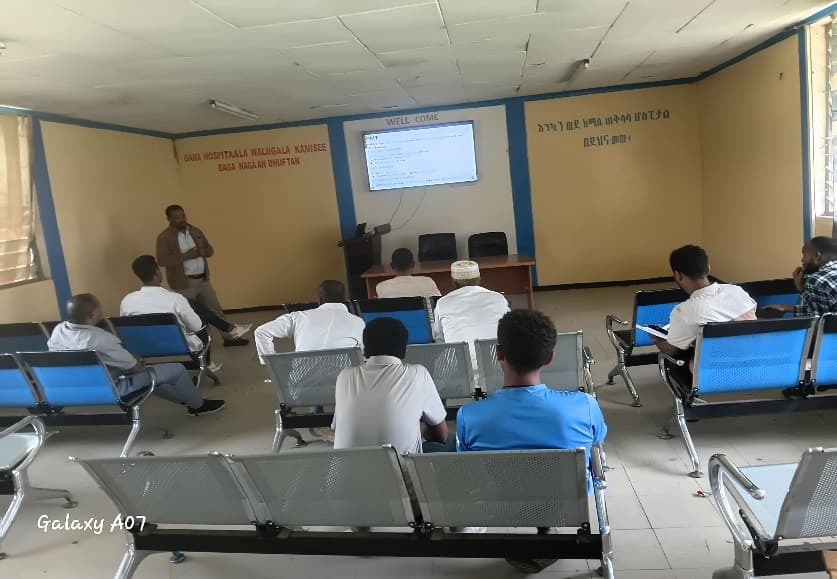
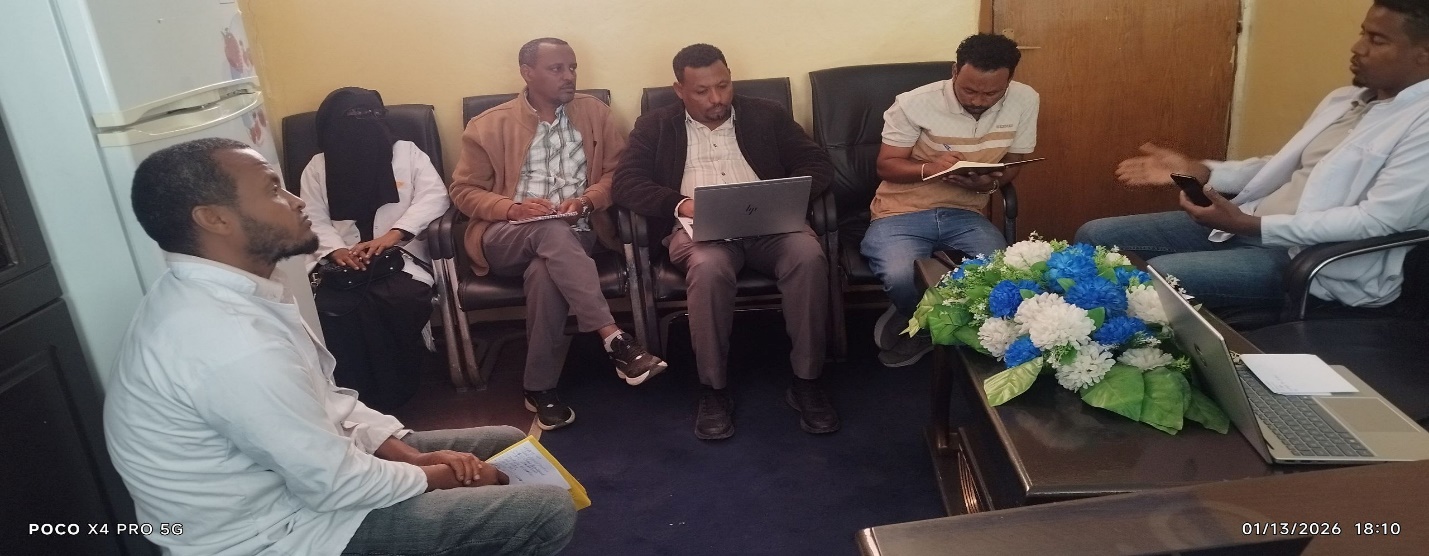
In January 2026, a Targeted Support Team (TST) from the Amhara Regional Health Bureau, in collaboration with the USG-funded Supply Chain Strengthening (SCS) Project, conducted an assessment and supportive supervision visit to identify the challenges and work with the hospital on practical solutions.
Turning assessment into action
Rather than stopping at identifying gaps, the TST worked closely with hospital leadership and pharmacy staff to develop a clear action plan with responsibilities and timelines. Onsite mentoring was combined with regular remote follow-up and biweekly progress updates to maintain momentum and accountability.
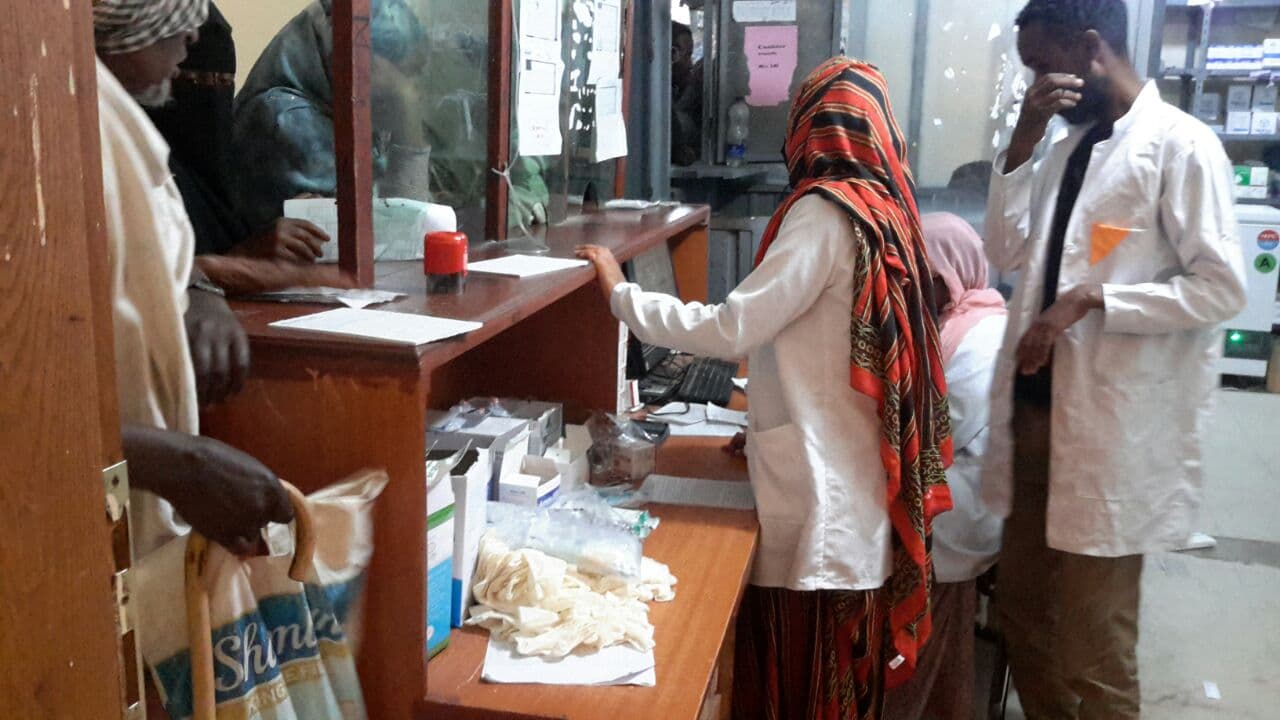
With strong commitment from hospital leadership, Kemissie transformed its pharmacy operations. Job descriptions were developed, a three-year pharmacy strategic plan was introduced, staff responsibilities were clarified, and the medical store was reorganized. Bin cards were printed and consistently updated, internal reporting was strengthened, and routine temperature monitoring was introduced.
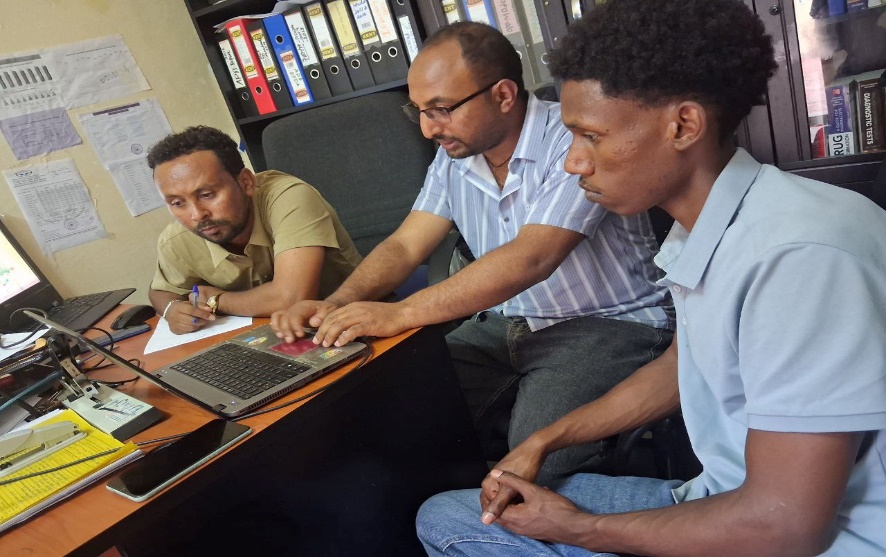
The hospital also took an important step toward digital transformation. DAGU-2 was restored, improving electronic supply chain management and data visibility. The hospital invested approximately ETB 500,000 in e-APTS implementation, procured three Epson printers, and trained pharmacy staff to use the system.
From manual processes to digital, accountable services
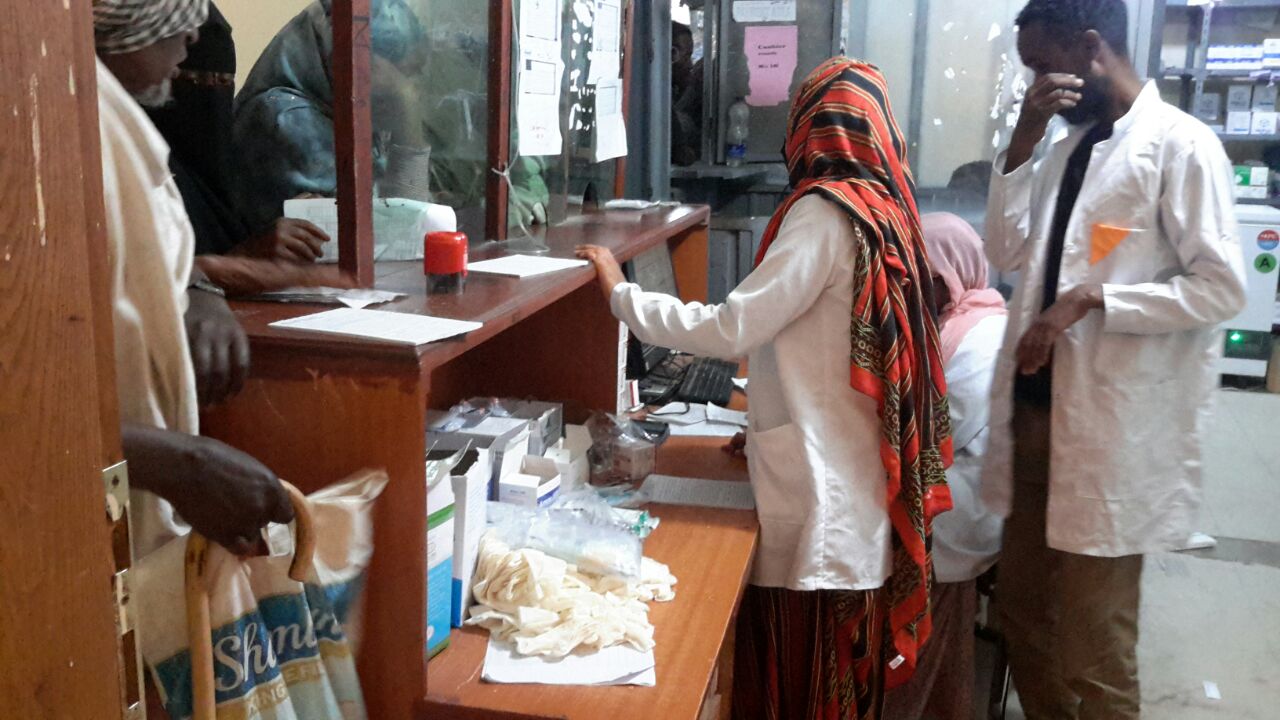
The changes quickly translated into improvements. Pharmacy staff now have clearer roles and responsibilities, inventory records are more accurate, storage conditions are better monitored, and pharmaceutical information is more accessible for decision-making.
The shift from predominantly manual processes to DAGU-2 and e-APTS has strengthened inventory management, product traceability, and accountability. Medicine availability also improved, with the hospital achieving an 89.83% supplier fill rate.
“The targeted support and continuous follow-up helped us turn identified gaps into practical improvements. Strengthening e-APTS and DAGU-2 has improved our pharmacy operations, data visibility, and accountability.” — Abinet Belayhun, Pharmacy Head, Kemissie General Hospital
Maturity score of the hospital
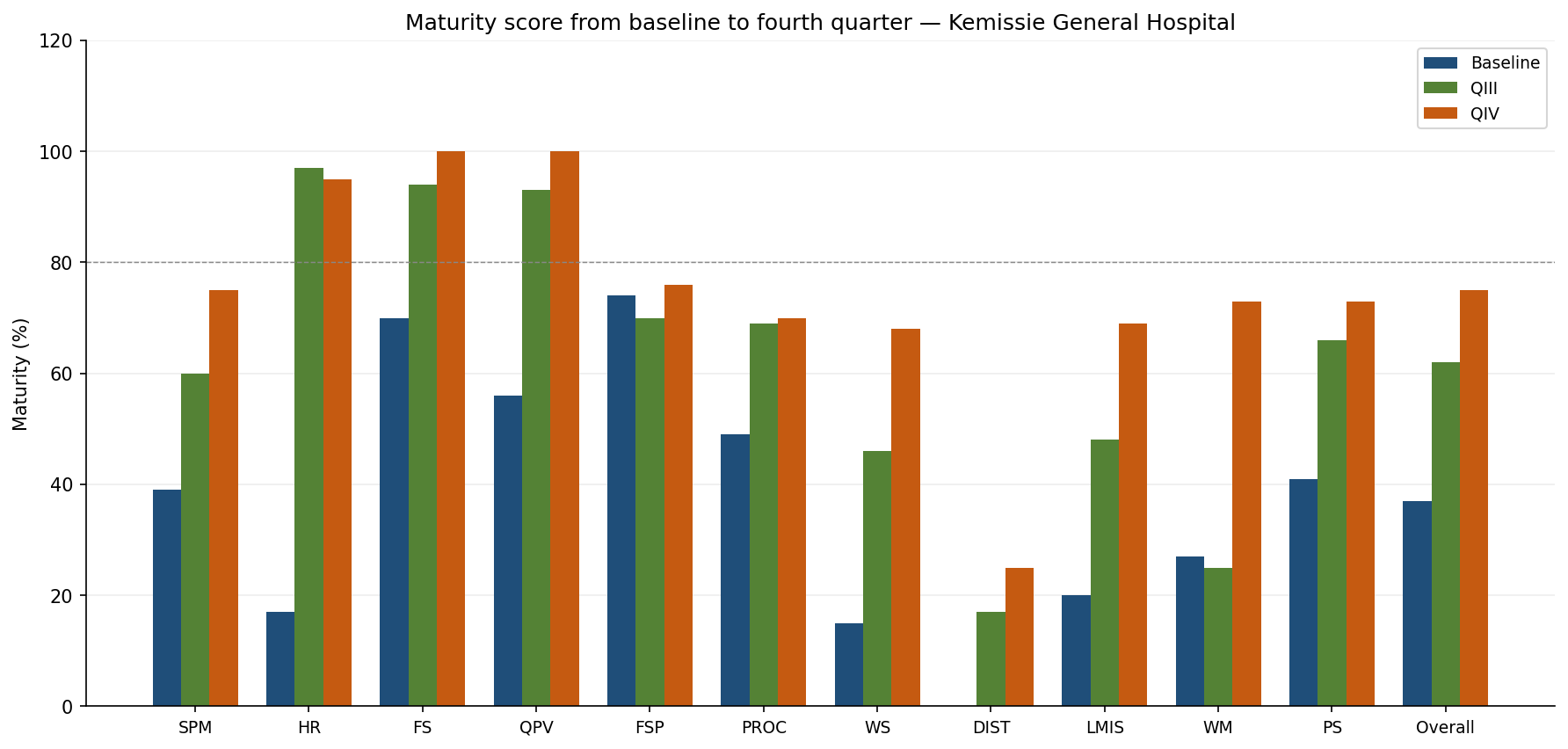
The National Supply Chain and Pharmacy Service maturity assessment showed substantial improvement from baseline to the fourth quarter, with the overall maturity score increasing from 37% at baseline to 62% in the third quarter and 75% in the fourth quarter. Significant progress was observed in financial sustainability, which reached 100%, and product quality and pharmacovigilance, which also achieved 100%. Human resource management improved from 17% at baseline to 95% in the fourth quarter, while strategic planning and management increased from 39% to 75%. Notable improvements were also recorded in warehousing and storage (15% to 68%), logistics management information systems (LMIS) (20% to 69%), waste management (27% to 73%), and pharmacy services (41% to 73%).
RRF data quality improvement
RRF data quality showed consistent overall improvement from December 2025 to August 2026. The score increased from approximately 68% in December 2025 to 85% in April 2026, remained stable at 85% in June 2026, and reached 100% in August 2026. This progress indicates strengthened reporting accuracy and data quality management over the assessment period.
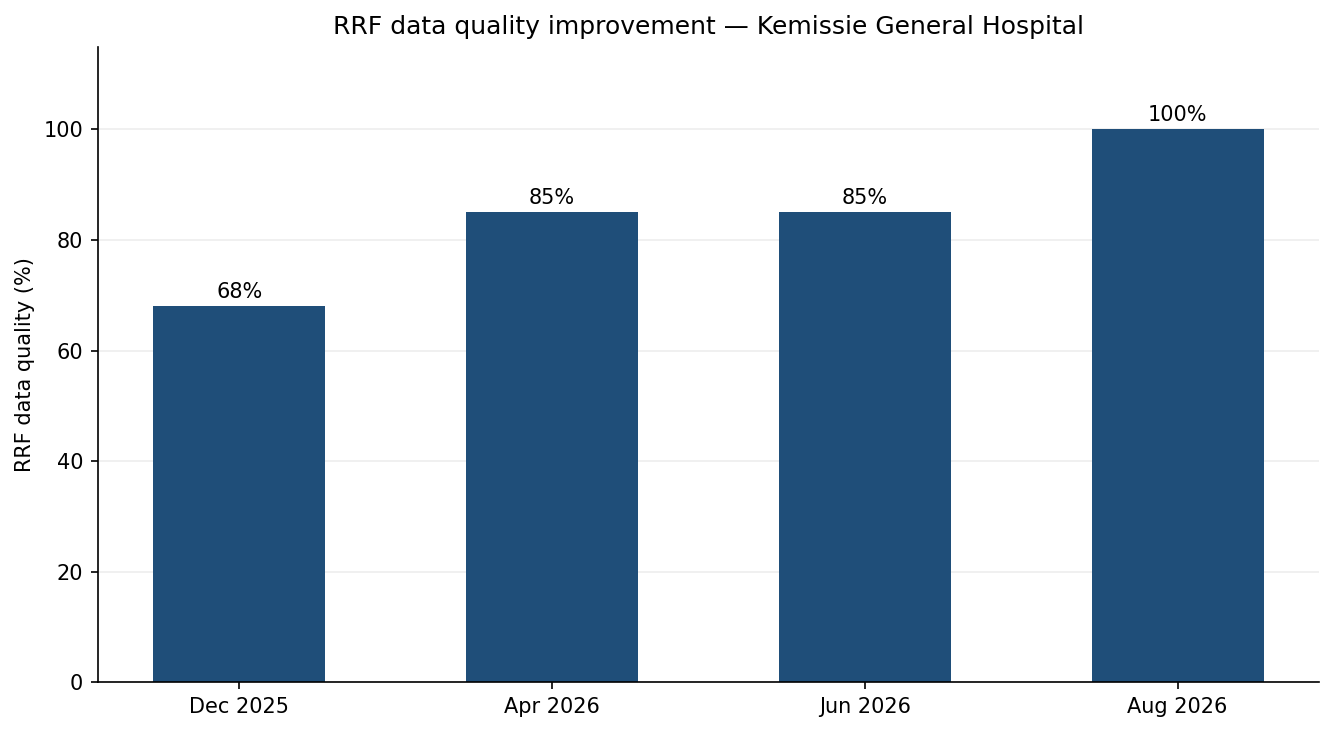
The improvement in maturity scores across modules and the notable enhancement in RRF data quality were attributed to several targeted interventions, including regular facility-level supportive supervision and feedback by the TST, discussion of identified performance gaps during cluster-based performance review meetings, development and implementation of performance improvement plans, and need-based capacity-building for pharmacy staff.
A model of local ownership
Kemissie General Hospital’s experience demonstrates that meaningful improvement does not always require complex solutions. Targeted mentorship, committed leadership, practical action planning, and consistent follow-up helped the hospital move from identified weaknesses to measurable improvements in a relatively short period.
The experience highlights the value of combining government technical support with strong facility ownership. By investing in digital systems, strengthening staff accountability, and acting on assessment findings, Kemissie General Hospital has established a stronger foundation for efficient, transparent, and sustainable pharmaceutical services — and ultimately better service for patients.