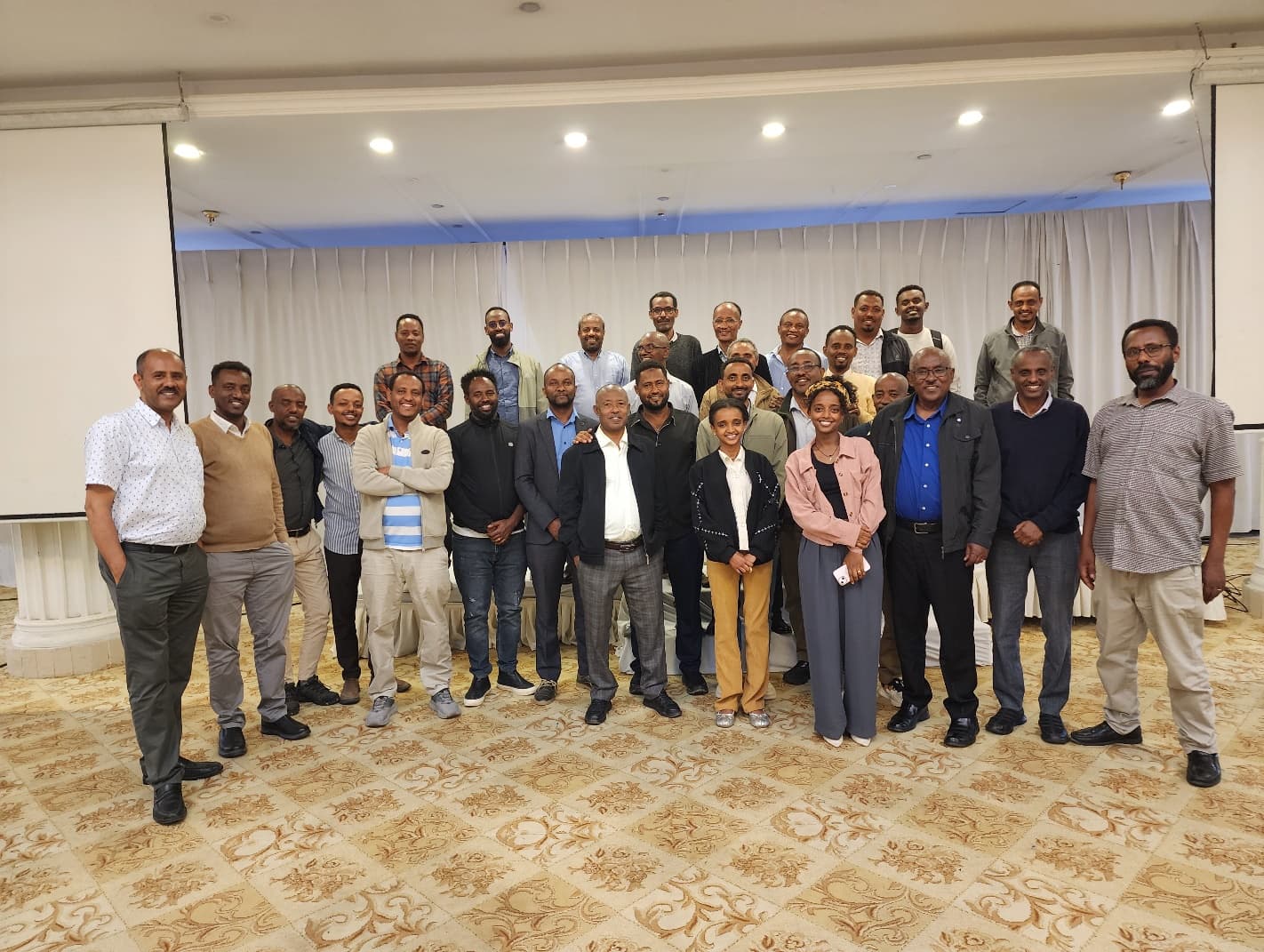
The United States Government Supply Chain Strengthening (USG SCS) Project, implemented by Management Sciences for Health, concluded its Quarter 3 Pharmaceutical Management Review Meeting on July 13–14, bringing together project leadership, technical experts, regional coordinators, and field teams to assess progress, share lessons, and define priorities for the final quarter of the fiscal year.
Welcoming participants, Alemayehu Nigatu, Performance Improvement Lead at U³ SystemsWork International, a subcontractor of the USG SCS, described the meeting as an important opportunity for the team to “pause, reflect on progress, and plan strategically for the future.”
Edmealem Ejigu, Chief of Party of the USG SCS project, in his opening remarks, reaffirmed the project’s commitment to strengthening Ethiopia’s pharmaceutical management system through partnership, innovation, evidence-based implementation, and continuous quality improvement. He emphasized that achieving higher levels of maturity requires sustained ownership by Regional Health Bureaus, health facilities, and partners, rather than reliance on project support alone.
During the past nine months, the project provided intensive technical assistance to 401 health facilities (184 hospitals and 217 health centers) across Ethiopia through multidisciplinary Targeted Support Teams (TSTs); one health center in Gambella was not reached due to security issues. Quarter 3 activities reached 387 health facilities (96%) despite security and operational challenges. The teams conducted maturity assessments, developed joint improvement plans, provided onsite mentoring, and followed up through remote coaching and performance monitoring.
The performance review demonstrated measurable improvements across several pharmaceutical management areas. Health centers increased their average maturity score in Strategic Planning and Management from 30% at baseline to 42%, while hospitals improved Quality and Pharmacovigilance from 41% to 69%. Waste Management maturity also increased substantially, from 36% to 54% in hospitals and 30% to 42% in health centers. Financial Sustainability remained one of the strongest-performing areas, with average maturity reaching 74% in hospitals and 71% in health centers.
Commodity availability remained consistently high across major public health programs. HIV tracer products recorded availability of up to 99.4% for TLD, malaria tracer commodities reached 98.3% availability for at least one artemisinin-based combination therapy (AL), TB kits achieved 100% availability, and oxytocin availability for maternal health remained at 99%.
Participants also highlighted best practices that contributed to improved performance, including digital inventory management, strengthened pre-refill analysis, remote mentoring through Telegram and Zoom, standardized inventory tools, and stronger collaboration among health facilities, Zonal Health Departments, and Regional Health Bureaus. These innovations have improved medicine availability, inventory visibility, leadership ownership, and data-driven decision-making.
The meeting also recognized ongoing challenges, including medicine stock-outs, workforce turnover, transportation and financing constraints, infrastructure limitations, and security-related disruptions. Participants recommended strengthening leadership commitment, expanding mentoring and supportive supervision, improving data quality and digitalization, institutionalizing the TST approach within government systems, and enhancing collaboration among Regional Health Bureaus, EPSS, and development partners.
The review concluded with consensus to intensify onsite support to selected facilities during Quarter 4, reinforcing a shared commitment to improving medicine availability, service quality, and the resilience of Ethiopia’s pharmaceutical supply chain and pharmacy services.